
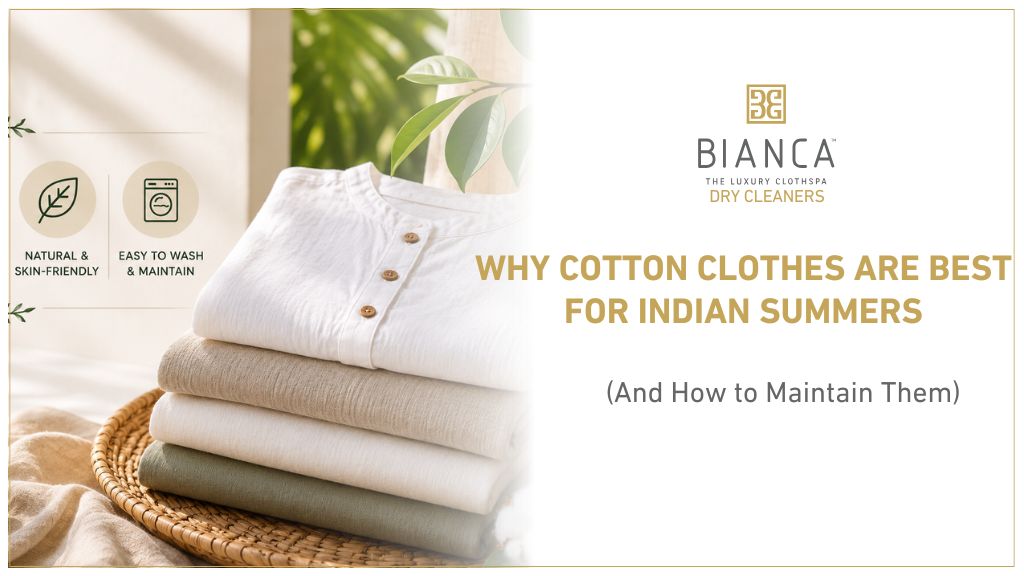
As you prepare for your summer escapes (whether it’s a coastal retreat in Alibaug or a high-paced city tour), the most critical item in your suitcase isn’t your camera, but the molecular structure of your clothing. While many fabrics claim to be comfortable, cotton remains the undisputed cooling engine for the Indian climate. Yet, many find that despite professional cleaning, their favourite shirts and kurtas develop a persistent scent. If your clothes smell after washing, the issue isn’t your hygiene. It’s a failure in fibre maintenance.
To maintain the lifespan and lustre of your wardrobe, you must understand the chemical intelligence behind fabric care.
Key TakeAways
- Cotton’s breathable hollow fibres help absorb sweat and keep the body cool in Indian summers.
- Synthetic fabrics trap heat and bacteria, often causing odour buildup and discomfort.
- Hard water, detergent residue, and fabric softeners can reduce cotton’s breathability over time.
- Proper washing and fabric care help prevent yellowing, stiffness, and lingering odours.
- Professional fabric care can restore softness, freshness, and the lifespan of premium cotton garments.
Summer Fabric Performance Matrix
Fabric Type | Breathability | Moisture Absorption | Odour Retention | Cooling Rating |
Cotton | High | Excellent | Low (if treated) | 5/5 |
Linen | Very High | Moderate | Low | 5/5 |
Polyester/Sports | Low | Zero | High (Bacterial) | 1/5 |
Silk | Moderate | High | Medium | 3/5 |
The Hollow Fibre Secret: Cotton as a Cooling Engine
Why are cotton clothes best for summer? It comes down to the plant’s microscopic architecture. Unlike synthetic plastic fibres that are solid and repel water, a cotton fibre has a hollow core called a lumen.
This hollow centre creates a natural capillary action. It acts like a microscopic pump, pulling sweat away from your skin and moving it to the outer surface of the garment, where it can evaporate. This molecular breathability is what makes cotton the premium choice for skin health. When you wear synthetics, sweat can get trapped, creating a greenhouse effect that can lead to heat rash
The Biofilm Crisis: 3 Mumbai Washing Traps
The primary reason clothes smell at home is the reactivation effect. You put on a freshly laundered shirt, but as your body warms up, a sour smell rises. Odour-causing bacteria in the fabric, specifically Staphylococcus hominis, are responsible for these smells.
- The Hard Water Bridge: Mumbai’s water (averaging 200-250 ppm) creates $Ca^{2+}$ (Calcium) bridges on cotton cellulose. These minerals trap bacteria and reduce fabric absorbency by up to 39% over time.
- Detergent Recirculation: Home machines often fail to flush out the biofilm, a sticky layer of fats and minerals that acts as a shield for microbes.
- The Fabric Softener Paradox: While you may use softeners to add fragrance, they are often among the biggest laundry mistakes for designer clothes. Understanding how fabric softeners work is key to solving the odour issue. They function by coating fibres in a waxy, lubricating film. This layer effectively waterproofs the cotton, killing its ability to absorb sweat and (more importantly) locking bacteria and sebum inside a moisture-proof trap where they thrive.
The White-Yellow Shift: The Oxidation of Luxury
White cotton often turns a dull yellow due to lipid oxidation. Fats and oils from your skin become trapped in the fibre. When exposed to the Mumbai sun, these fats spoil (much like old butter), turning the fabric yellow and brittle. Proper sustainable fabric care is essential to remove these lipids without using harsh bleaches that weaken the cellulose.
The Bianca Protocol: Professional Chemical Intelligence
At Bianca Cloth Spa, we treat laundry as a science. While home washing often recirculates grime, our technology ensures a forensic clean, crucial for your vacation prep.
- pH-Balanced Sanitisation: We target a precise 49–60°C range to denature proteins and kill bacteria without losing the fabric’s lustre.
- Mineral Extraction: We use specialised services to break the Calcium bridges formed by hard water, restoring the cotton’s natural pumping action.
- Molecular Rinsing: Our machines use specific mechanical slapping actions to flush the hollow lumen of the cotton fibre, ensuring no biofilm remains.
Whether you are elevating everyday basics or protecting your finest summer linens, our story is built on preserving the integrity of your most cherished garments.
Frequently Asked Questions
Vinegar helps break down mineral buildup, but it cannot fully penetrate a hardened bacterial biofilm. Professional sanitisation is required for permanent freshness.
Most hotels use heavy-duty industrial detergents and hard water. The process creates lime soap buildup, which plugs the fibre's pores and makes the fabric feel crunchy.
Use soft water and a temperature-controlled cycle (max 60°C for whites). Avoid home softeners, which clog the fabric's pores and kill breathability.
Ensure immediate drying and use an anti-bacterial rinse to eliminate the source of the odour rather than masking it with perfume.