

Why Red Wine Stains Are Hard to Remove
Red wine has natural colour compounds called tannins. These bond with fabric fibres, not just sit on top of them. That’s why a stain can look like it’s gone right after a rinse, then come back as a faint mark once the clothes dry.
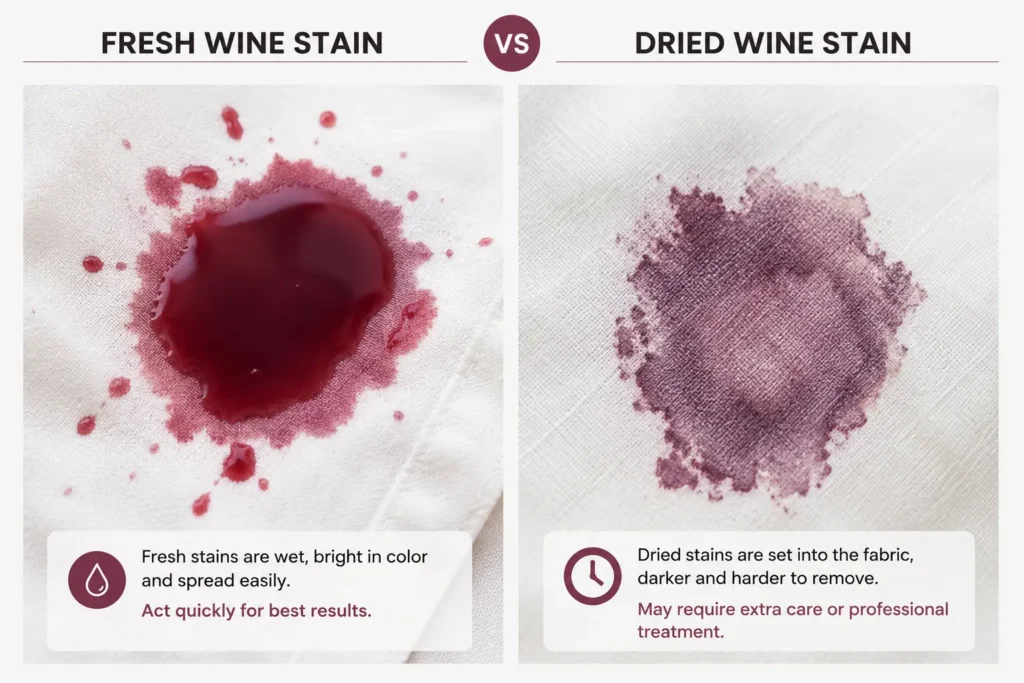
Heat is the biggest problem. Hot water, a hot dryer, or even sunlight can lock the colour into the fabric permanently. Wine isn’t the only stain that behaves this way — several common stains are difficult to fully remove without professional help, and red wine is one of the trickiest because the damage often isn’t visible until the fabric has already dried.
What to Do Right Away
- Blot, don’t rub. Rubbing pushes the wine deeper into the fabric.
- Use cold water only. Hot water sets the stain.
- Skip the hair dryer. Any heat can make the stain permanent.
- Avoid scrubbing with salt, baking soda, or vinegar on silk, wool, or delicate fabric. The same blot-don’t-rub rule applies to delicate fabrics like silk and chiffon, where scrubbing can break the fibres or push the stain in deeper.
- If it’s a fabric you care about, stop here and get it professionally cleaned rather than experimenting further.
Home Remedy vs. Professional Cleaning
Home remedies can work on cheap, sturdy cotton if you act fast. But for anything delicate or valuable, the risk of damage is high — this is exactly the question we cover in our comparison of stain remover sprays versus professional cleaning.
Here’s a simple breakdown:
| Home Remedy | Professional Dry Cleaning | |
|---|---|---|
| Best for | Plain cotton, low-value items | Silk, wool, sarees, suits, anything valuable |
| Risk | Can bleach colour or damage fibres | Fabric is checked before any treatment |
| Products used | Salt, vinegar, baking soda | Solvent and enzyme-based stain removers |
| Works on dried stains? | Rarely | Yes, in most cases |
| Heat used? | Often, by mistake | Only after the stain is confirmed gone |
When You Should Stop and Call a Professional
- The stain has already dried.
- It’s on silk, wool, a saree, or a wedding outfit.
- You already tried a home remedy and it didn’t work.
- The garment is expensive or has sentimental value.
Waiting too long is one of the costliest laundry mistakes you can make with a luxury wardrobe — the longer a stain sits, the more it sets, and the harder it becomes to remove safely.
How Bianca Cloth Spa Treats Red Wine Stains
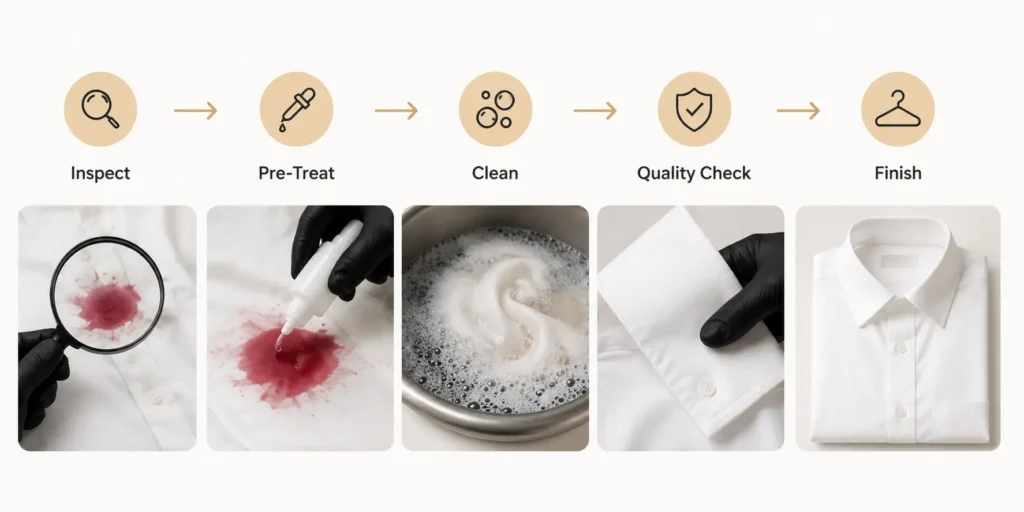
- We check the fabric type before starting any treatment.
- We use solvent and enzyme-based removers made for wine stains, not household products.
- We only apply heat once the stain is fully gone.
- We offer free pickup and drop-off across Mumbai.
We offer free pickup and drop-off across our dry cleaning stores in Mumbai, so you don’t have to step out with a stained garment.
The sooner a stain is treated, the better the chance of full removal. Waiting, or trying several home fixes first, often makes it harder to fix later.