
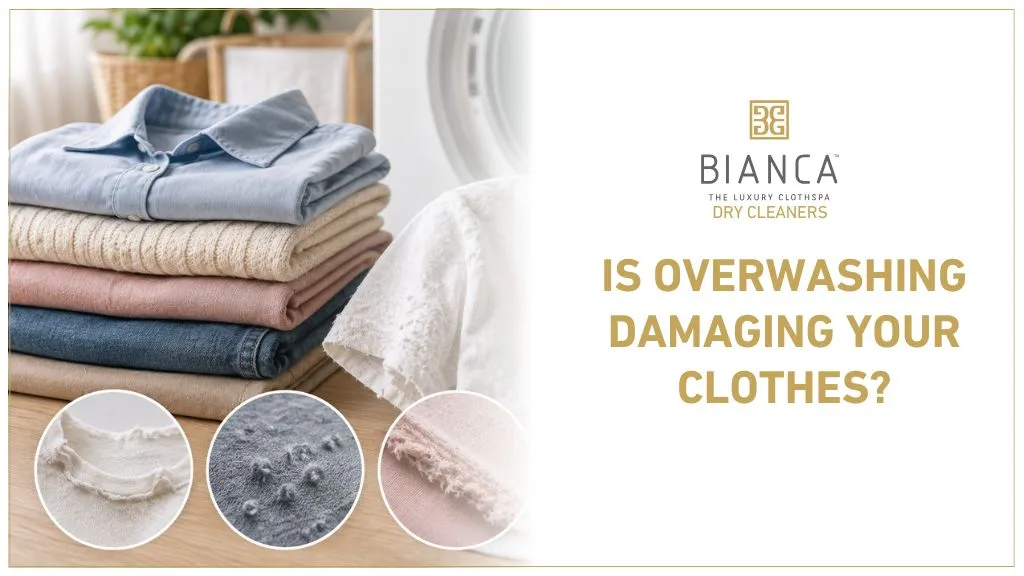
You pull a bespoke silk shirt from your wardrobe, only to find it faded and misshapen. Elite wardrobes suffer silently from a hidden enemy: over-washing.
Frequent laundry cycles subject delicate fabrics to relentless friction, harsh detergents, and thermal stress. This process breaks down fibres, strips dyes, and ruins elastane. Rethinking your cleaning routine saves your investment garments from premature ruin.
The Silent Destroyer: Why You Over-Wash Your Clothes
Equating washing with simple hygiene hides a deeper truth: the very process meant to clean your clothes slowly erodes them. Textile engineers test fabrics according to strict global standards, such as ISO 6330 (Domestic washing and drying procedures for textile testing). Textile testing frameworks show how repeated laundering can increase mechanical stress on fabrics and contribute to gradual performance loss. When you tumble items in a domestic machine, fibres collide against the steel drum and rub violently against one another.
This friction thins the weave, causes unsightly pilling, and dulls original colours. Furthermore, heat shocks elastane, leading to stretched collars and rippled waistbands. Why clothes lose shape often comes down to aggressive home laundering rather than actual wear and tear.
How Repeated Washing Can Affect Fabric Performance
Fabric Type | Potential Impact (Harsher Cycles) | Potential Impact (Gentler Cycles) | Directional Difference |
100% Cotton | Material tensile loss | Moderate tensile loss | Slower degradation |
Cotton/Poly Blend | Visible tensile loss | Minor tensile loss | Slower degradation |
100% Polyester | Slight tensile loss | Minimal tensile loss | Slower degradation |
Elastane Blend | Accelerated elasticity loss | Reduced elasticity loss | Better shape retention |
Note: This model illustrates general textile wear principles aligned with ISO 6330 testing frameworks.
Synthetics pose an environmental challenge because they release measurable fibre fragments during laundering. Gentler laundering conditions may help reduce fibre fragment release by lowering mechanical stress during washing (AATCC TM212).
The Hidden Financial Toll of Prematurely Degraded Garments
Elite dressing demands impeccable presentation. Yet, throwing high-end garments into a standard wash cycle destroys their cost-per-wear value. A bespoke suit or a fine cashmere jumper represents a significant financial investment. When you wash these items too frequently, you end up replacing them season after season.
Garment degradation alters the drape, fit, and feel of luxury fabrics. You lose the sharp silhouette that defines premium tailoring. Protecting your wardrobe means shifting from reactive cleaning to proactive preservation, ensuring every piece retains its luxury finish for years. Retailers routinely face returns due to care label errors; accurate testing and proper maintenance protocols significantly mitigate this risk.
The Wear-Frequency Standard: When to Clean Your Garments
Elite tailoring and premium fabrics demand a forensic approach to maintenance. You must calibrate cleaning frequencies by textile construction to ensure longevity.
Garment Type | Wears Before Washing | Optimal Care Method |
Raw Denim | 5 to 10 | Air out; Bianca Cloth Spa dry clean sparingly |
T-shirts & Blouses | 1 | Bianca Cloth Spa wet clean or gentle hand wash |
Activewear | 1 (Immediately) | Technical cool wash to protect elastane |
Tailored Blazers | Seasonal (Unless soiled) | Bianca Cloth Spa steam and spot clean |
Silk Dresses | 1 to 2 | Bianca Cloth Spa delicate wet clean |
Couture pieces require impeccable precision. Maintenance tips for delicate couture dresses highlight why professional intervention outclasses domestic machines. Elastane blends typically suffer fatigue after repeated harsh washes, whereas cotton exhibits visible pilling over time. Wool requires expert care to avoid felting in aggressive machine cycles.
How Professional Laundries Preserve Your Investment
Top-tier wardrobes require expert handling rather than domestic guesswork. Professional dry cleaners and textile studios bypass the destructive friction of standard washing machines. They deploy advanced wet-cleaning technology, precise solvent chemistry, and specialised steam finishing.
Experts analyse fibre blends meticulously before choosing a programme, ensuring dyes remain locked in and weaves retain their natural tension. They safely dissolve grease and eliminate bacteria at microscopic levels without stressing structural seams or delicate embroidery. Entrusting your garments to professionals stops shrinkage, prevents micro-tears, and extends the life of your wardrobe exponentially.
Hospital scrubs mandate washing after every use, but controlled professional laundering may better preserve protective finishes than harsher domestic washing. Requesting laundering protocols aligned with recognised textile testing standards, such as ISO 6330, can support better preservation decisions.
Furthermore, high-performance functional finishes degrade over time. A Durable Water Repellent (DWR) coating loses effectiveness with repeated standard washes; professional reproofing can help restore water repellency after such washes.
Frequently Asked Questions
Cold water reduces thermal shock and minimises colour bleeding, but it still causes mechanical friction during the spin cycle.
Yes. Neglecting hygiene allows bacteria and accumulated body oils to permanently rot natural fibres.
Inspect the fabric under bright light for invisible smudges, and smell the underarms. If it looks pristine and smells neutral, wear it again.
Aggressive rubbing spreads stains and abrades the weave. Professionals treat delicate fabrics using targeted, non-abrasive extraction methods.
Trapped moisture encourages mould and mildew if garments dry too slowly in humid weather, making professional drying environments essential for longevity.
Hang heavy wool or cashmere coats in a well-ventilated space after every wear to naturally release trapped odours and moisture.