
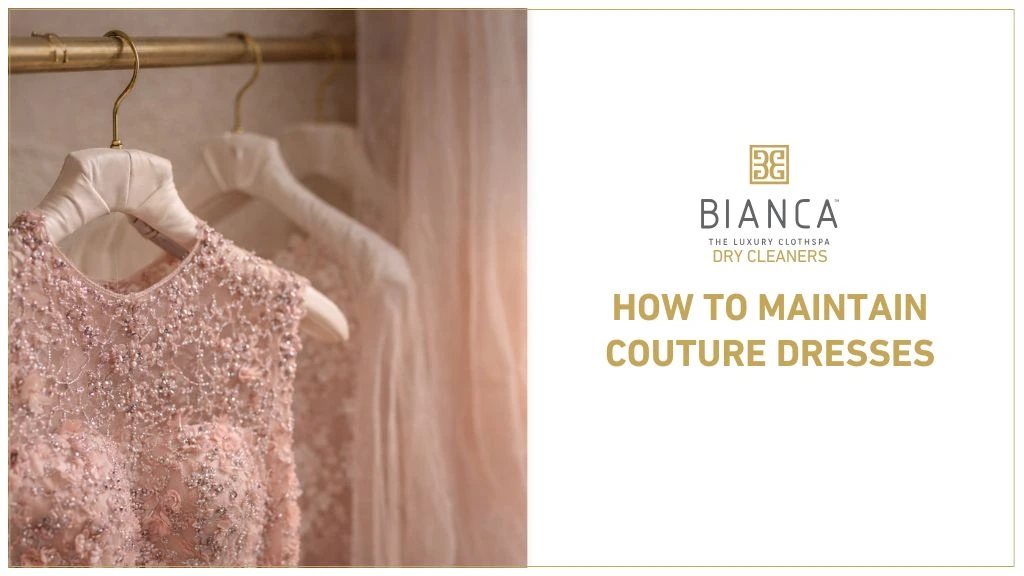
A couture gown is far more than a garment. It is a masterpiece of architecture, hours of meticulous hand-embroidery, and a significant investment in your personal legacy. Whether it is a hand-painted silk saree or a crystal-encrusted evening gown, these pieces require more than just a standard cleaning cycle. They need a preservation strategy.
In the humid, salt-laden air of Mumbai, luxury fabrics face unique threats. From the oxidation of real zari threads to the subtle devastation of wardrobe mildew, your collection needs expert vigilance. Here is how we recommend you maintain your most delicate couture pieces to ensure they remain as breathtaking as the day you first wore them.
1. Respect the 'Golden Hour' of Stains
The moments immediately following a gala are the most critical. If you notice a spill, be it champagne or a delicate juice, resist every urge to scrub it. Rubbing a stain on silk or chiffon often breaks the fibres or pushes the pigment deeper into the weave.
Instead, gently blot the area with a clean, white cotton cloth. Never use club soda or home detergents, as these can set the stain permanently. Your best course of action is to send the piece to us as soon as possible. Professional intervention within 24 to 48 hours significantly increases the success rate of complete removal.
2. Defeat the Mumbai Humidity
Our tropical climate is the silent enemy of high fashion. High humidity levels encourage the growth of microscopic fungi that can weaken delicate fabrics, such as silk and lace. If you live near the coast, salt air can cause metallic embellishments to tarnish or turn black.
We advise keeping your dressing room climate-controlled at a steady temperature. Use a dehumidifier if necessary. Furthermore, ensure your wardrobe has enough space; crowding garments leads to “fabric crushing” and prevents essential airflow.
3. The Professional Preservation Standard
Not every luxury item is suitable for a standard washing machine. In fact, many can be destroyed by the heat and mechanical action of a home dryer. We have detailed this further in our guide on 5 luxury garments that should never be washed or dried in a machine.
For couture, we use a sophisticated “hydrocarbon” cleaning process or specialised green solvents. These methods protect the structural integrity of the fabric while ensuring that delicate sequins and beads retain their lustre.
4. Storage: Ditch the Plastic
Many clients make the mistake of leaving their gowns in the plastic sleeves provided by standard dry cleaners. Plastic traps moisture and can emit gases that cause yellowing and discolouration of white fabrics over time.
At Bianca, we provide breathable, acid-free garment bags for all our couture services. For heavy lehengas or gowns with significant weight, we recommend storing them horizontally in acid-free boxes. Hanging a 10kg hand-embroidered skirt can cause the waistband to stretch and the silhouette to distort over time.
5. Give Your Garments a 'Rest Day'
Fabric fibres, especially natural ones like wool and silk, need time to recover their shape after being worn. Avoid wearing the same couture piece on back-to-back days. Allow the garment to air out in a well-ventilated room for a few hours before storing it again. Such processes allow any residual body heat or moisture to evaporate naturally.
Frequently Asked Questions
Many of our clients have "wearable collection" riders on their insurance. We maintain meticulous digital records and "Condition Reports" for every item, serving as a vital paper trail for your high-value assets.
The greatest risk to a ₹10 Lakh lehenga is transit. We offer a bespoke Travel Prep Service where we professionally steam and "suspension-pack" your garments into archival-grade trunks using acid-free buffers to prevent friction-burn.
"Shattering" occurs when older silk becomes brittle. We use a specialised Heritage Restoration Protocol that involves a hand-delivered, solvent-free hydration process to reintroduce suppleness to the silk fibres.
Bespoke tailoring relies on a floating internal canvas. We use Anatomical Steam Forms that mimic the human torso, ensuring the internal architecture of your suit is preserved, not crushed by flat-pressing.
We understand that privacy is paramount. We offer a Discreet Logistics Service with vetted specialists who coordinate directly with your Estate Manager or Chief of Staff. Our vehicles are unmarked upon request.