
A science-led approach to preserving silk, wool, and designer upholstery in Mumbai.
The instinct to reach for a miracle spray when red wine hits a silk rug, or coffee splashes a bespoke suit, is universal. Yet, for the discerning resident of Mumbai (where humidity, dust, and high-value textiles converge), that split-second decision often marks the difference between a salvageable mishap and a permanent loss.
While supermarket stain removers market themselves as “all-purpose” solutions, they are frequently too blunt an instrument for ethically sourced silk, vintage wool, or the designer upholstery found in Mumbai’s finest homes. At Bianca Clothspa, we view stain removal not as a chore, but as a precise science of textile preservation.
Key TakeAways
- Household stain removers can damage luxury fabrics through harsh chemicals and incorrect pH levels.
- Different stain types require different treatment methods; one-size-fits-all sprays can worsen the damage.
- DIY cleaning often causes wick-back, where stains reappear after drying.
- Aggressive cleaners can strip natural protective oils from silk and wool.
- Heat and improper cleaning methods can permanently set stains into fabric fibres.
- Professional stain removal uses fibre-specific solvents, controlled extraction, and temperature management.
- Early intervention significantly improves the chances of successful stain removal.
The Molecular Failure of Domestic Sprays
Most household cleaners rely on two aggressive levers: high alkalinity and bleach-like oxidisers. While these might suffice for a standard polyester blend, they ignore the nuanced chemistry of luxury fibres.
1. The pH Imbalance
Tannin stains (tea, wine) require a vastly different chemical approach than protein stains (blood, perspiration) or oil-based marks (makeup). A generic spray applies a “one-size-fits-all” formula that can permanently set pigments into the fibre core, especially on silk, wool, or acetate blends.
2. The Wick-Back Effect
Home cleaning often only reaches the visible surface. Without industrial extraction, dissolved liquid retreats into the backing or padding. As it dries, capillary action pulls the residual soil back to the surface, creating a ghost stain. Professional systems use subsurface extraction to lift the contaminant and the solution simultaneously.
The Invisible Structural Toll: Why “Clean” Does Not Mean “Safe”
Beyond the visible pigment, domestic sprays often initiate a chemical degradation process within the fibre’s molecular structure that goes unnoticed until the damage becomes irreversible. Most high-street solutions utilise aggressive surfactants that lower water’s surface tension, allowing it to penetrate deeply.
But on luxury fibres like silk or high-twist wool, these chemicals can strip away the natural sericin or lanolin, the protective waxes that give high-end textiles their characteristic lustre and resilience. The removal of these lipids causes the fibres to become brittle, leading to a phenomenon known as micro-splitting. To the naked eye, the stain may appear gone. But the fabric’s structural integrity is compromised, manifesting months later as premature pilling, fraying, or a dull, chalky appearance.
Professional restoration utilises fat-liquoring agents and pH-neutral lubricants that re-fortify the textile during the cleaning process, ensuring that the removal of a contaminant does not come at the cost of the garment’s lifespan.
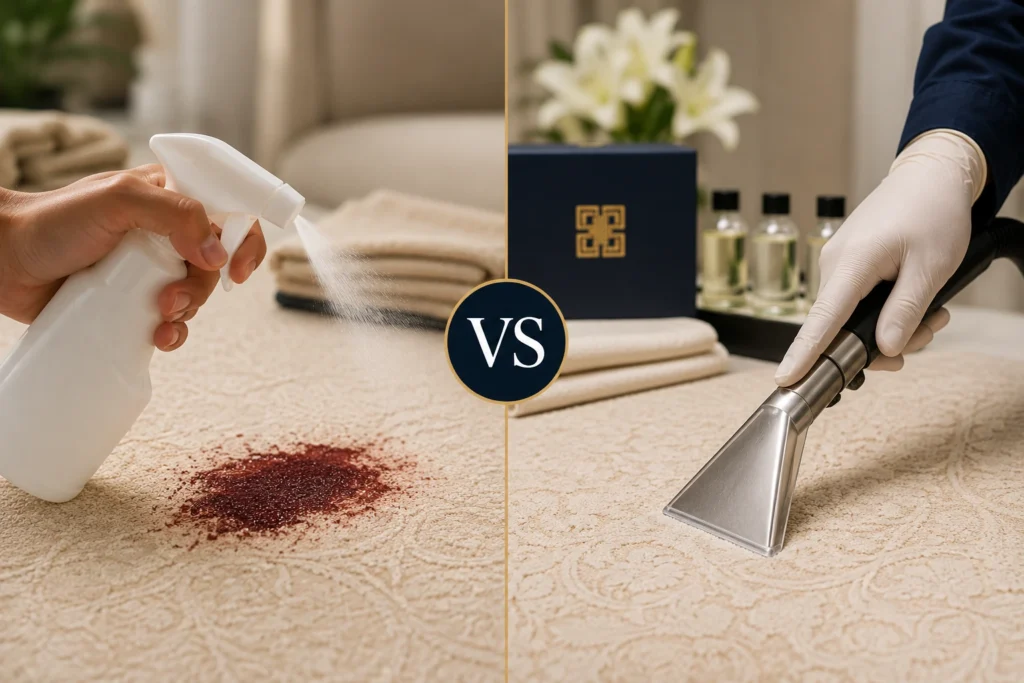
Why Professional Intervention is Non-Negotiable
For luxury or custom textiles, the value lies in the integrity of the weave. Professional restoration is a process of fabric stabilisation that ensures the longevity of your investment.
- Fibre-Specific Solvents: We deploy a library of targeted, eco-safe solvents designed to lift pigment without stripping the natural oils from wool or the protein structure of silk.
- Controlled Extraction: Unlike the abrasive rubbing of DIY attempts, we utilise calibrated tamping and vertical extraction. The process prevents the starburst patterns and pilling that are common with manual scrubbing.
- Thermal Control: High temperatures are a stain’s most dangerous ally. Using warm water or a hair dryer can cook a stain into the matrix, making it a permanent part of the fabric. Our labs use controlled-temperature steam and cold-water rinses to ensure the pigment stays separate from the fibre.
Frequently Asked Questions
Vinegar helps break down mineral buildup, but it cannot fully penetrate a hardened bacterial biofilm. Professional sanitisation is required for permanent freshness.
Most hotels use heavy-duty industrial detergents and hard water. The process creates lime soap buildup, which plugs the fibre's pores and makes the fabric feel crunchy.
Use soft water and a temperature-controlled cycle (max 60°C for whites). Avoid home softeners, which clog the fabric's pores and kill breathability.
Ensure immediate drying and use an anti-bacterial rinse to eliminate the source of the odour rather than masking it with perfume.