
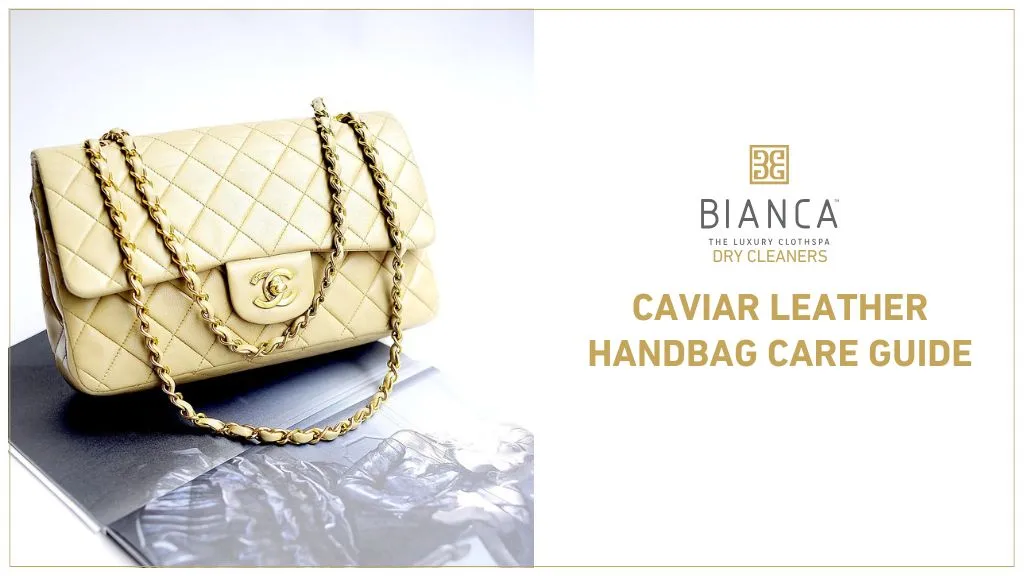
I have seen it happen a hundred times. A client walks into our studio, opens a dust bag, and finds their prized Chanel Classic Flap covered in a ghostly white fog.
In Mumbai, your luxury collection is under constant attack. Whether you live in a sea-facing apartment in Worli or a high-rise in Bandra, the air itself is working against your leather.
Most collectors opt for caviar leather care because they believe this “pebbled” grain is virtually indestructible. That belief may hold good in London or New York. But in amchi Mumbai, that iconic texture actually hides a dangerous secret.
The Mumbai "Sticky" Syndrome
Have you ever reached for your bag and felt it sticking to your fingers? That isn’t just heat. Mumbai’s relentless humidity triggers a chemical reaction known as hydrolysis. The protective resin on your caviar leather begins to break down, turning your luxury investment into a dust magnet.
At Bianca Cloth Spa, we don’t just wipe the surface. We use specialised neutralisers to stabilise the finish and restore that original, crisp “boutique feel.”
The Monsoon Heartbreak: Why Wiping Isn't Enough
The biggest pain point I hear from my clients is the “monsoon bloom.” You store your bag in June, and by September, it smells damp and has a mottled appearance. Because caviar leather is essentially heat-stamped calfskin, it has tiny “valleys” where mould doesn’t just sit, it takes root.
If you try to scrub this off at home, you’re likely pushing the spores deeper into the hide. Our Chanel bag care programme involves an ozone-cleansing chamber. The process kills the fungi at a molecular level without using a single drop of harsh chemicals that could ruin the leather’s temper.
Why the "Seaside Sparkle" is Fading
If you can smell the sea from your balcony, your bag is breathing in salt. This salt crystallises inside the grain. It acts like a tiny saw, slowly cutting into the leather with every flex of the bag. It also turns your 24k gold hardware (the chains, the CC clasp, and the grommets) cloudy.
Our luxury handbag restoration process includes a deep-pore extraction. We lift the salt and urban soot out of the grain using soft-bristled horsehair brushes, ensuring the leather stays supple and the hardware stays brilliant.
Stop the "Denim Bleed" Nightmare
We all love wearing a light-coloured bag with dark jeans. But in the Mumbai heat, sweat acts as a carrier for dye. “Denim bleed” on a light beige caviar bag is a nightmare, but for us, it’s a science. We use a “lift-and-trap” foam that pulls the blue pigment out of the pebbled texture without flattening the grain.
Frequently Asked Questions
Alcohol-based sanitisers are solvent-heavy. They instantly dissolve the protective resin on your caviar leather. If this happens, do not scrub it. Blot it immediately with a dry tissue. We can usually restore the dull patch by resealing the area with professional-grade resin, but DIY buffing often makes the issue permanent.
Alcohol-based sanitisers are solvent-heavy. They instantly dissolve the protective resin on your caviar leather. If this happens, do not scrub it. Blot it immediately with a dry tissue. We can usually restore the dull patch by resealing the area with professional-grade resin, but DIY buffing often makes the damage permanent.
In Mumbai, a tiny packet saturates in days. If left for months, a wet packet can actually trap moisture against the lining. We recommend a room dehumidifier in your walk-in wardrobe instead. If you must use silica, change the packets every 30 days.
Yes. Harsh UV rays act as a natural bleaching agent. Darker colours, such as navy, may develop a reddish tint, while light colours tend to turn yellow. We apply a UV-protective cream during our cleaning process to act as a "sunscreen" for your leather.
That smell is a warning sign of micro-mould in the lining. Do not spray perfume inside; the alcohol will stain. We use an ozone-treatment chamber to neutralise these odours at the source by safely killing the bacteria and spores.