
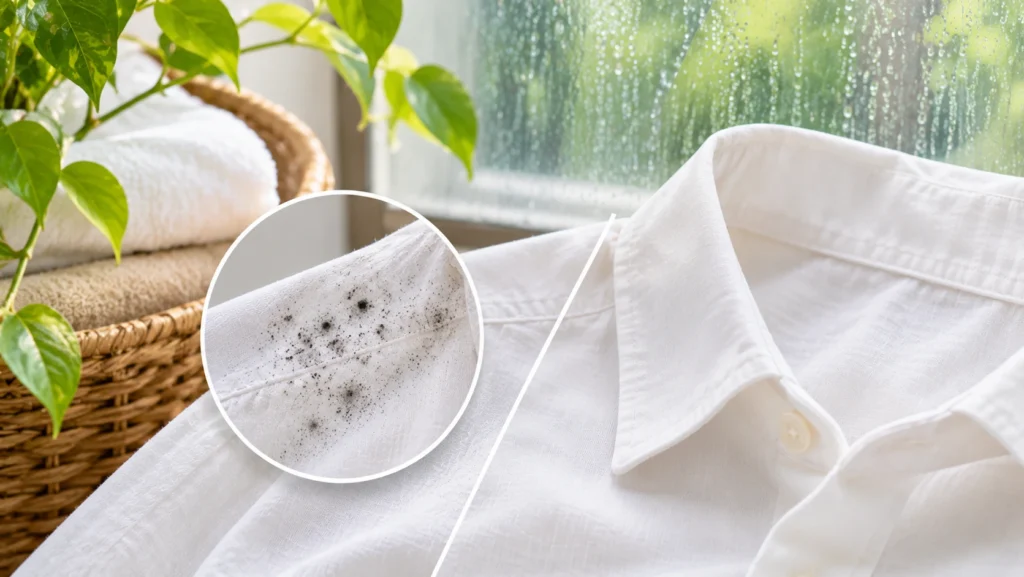
You open the wardrobe after a few humid weeks and find them: small black or grey spots on a white shirt, a silk dupatta or a jacket you haven’t worn since last season. In Mumbai, this is one of the most common fabric problems we see, and one of the most misunderstood.
Most black spots on clothes are mildew, a type of mould that grows on fabric in warm, damp conditions. Some are rust or oil stains that look similar. The fix depends on which one you’re dealing with, and on the fabric.
What causes black spots on clothes?
|
Spot type |
What it looks like |
Common cause |
|---|---|---|
|
Mildew / black fungus |
Clusters of small black, grey or greenish dots; musty smell |
Humidity, clothes stored damp, poor wardrobe ventilation |
|
Rust spots |
Orange-brown to dark brown marks, often in a line or single spot |
Metal hangers, hooks, zips, buttons or iron-rich water |
|
Oil or grease |
Dark, slightly translucent patches that darken after washing |
Food, hair oil, body lotion, machine grease |
|
Dye transfer |
Uneven dark smudges |
Damp clothes in contact with dark fabric |
The quick test: if the spots smell musty and appear in clusters, it’s mildew. If they’re brown-orange and near metal, it’s rust.
Why Mumbai humidity causes black fungus spots on clothes
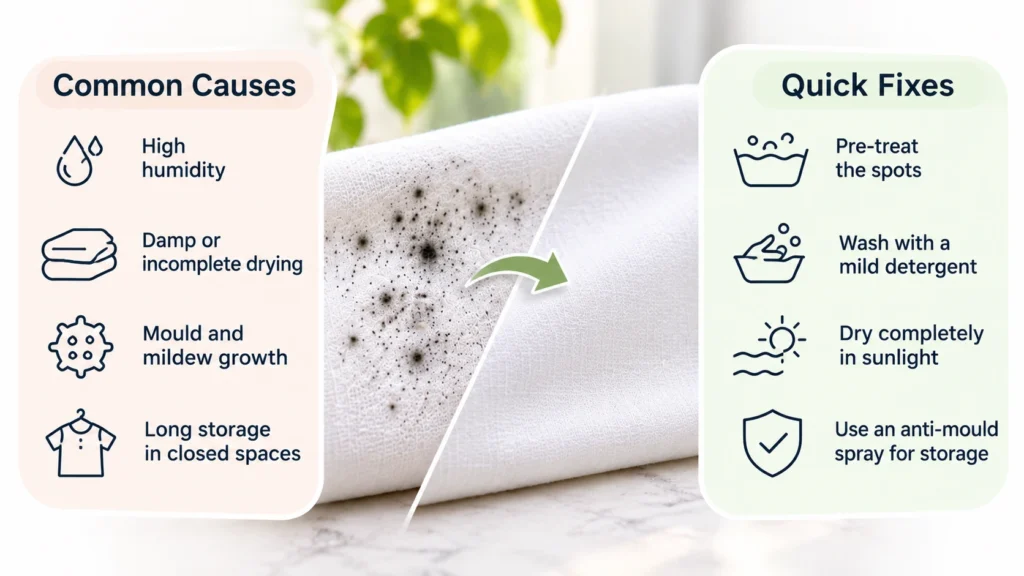
Mould spores are always in the air. They only need three things to grow on fabric: moisture, warmth and something to feed on. Mumbai’s monsoon provides all three.
- Humidity regularly sits above 80% during the monsoon, so fabrics absorb moisture even in a closed cupboard.
- Clothes dried indoors during the rains often stay slightly damp in the seams and folds.
- Body oils, sweat and starch left in unwashed clothes are food for mould.
- Closed, unventilated wardrobes, especially against outer walls, trap damp air.
Natural fibres such as cotton, linen and silk are the most vulnerable. Leather is too.
How to remove black spots from clothes
Act quickly. Fresh mildew is often removable. Mildew left for weeks can permanently stain and weaken fibres.
First, take the garment outside and brush off loose spores with a soft brush. Do this outdoors so the spores don’t spread to other clothes.
For white and colourfast cotton or linen
- Soak in a solution of one part white vinegar to four parts cool water for about an hour.
- Wash in the warmest water the care label allows, with your regular detergent.
- For stubborn spots on whites, use an oxygen-based bleach (not chlorine bleach), following the pack instructions.
- Dry in direct sunlight. UV light helps kill remaining spores and fade marks on white cotton.
- Check the stain before ironing or machine drying. Heat can set what’s left.
For lemon and salt on white cotton
Rub a paste of lemon juice and salt onto the spot, leave it in the sun for an hour, then rinse and wash. This works on light mildew and many rust spots, but only use it on white or undyed cotton and linen. Lemon can bleach colour.
For silk, wool, designer and coloured garments
Don’t use vinegar, lemon, bleach or hot water. These can strip dye, weaken protein fibres and leave a larger mark than the original spot. Brush off loose spores outdoors, keep the garment dry and away from other clothes, and bring it to a professional as soon as you can.
How to remove rust spots on clothes
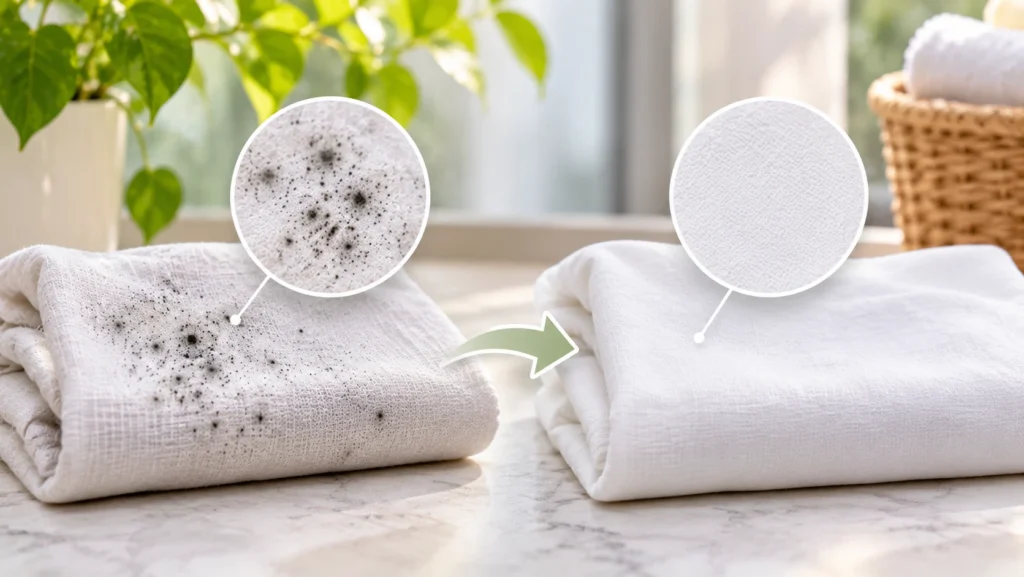
Rust needs a different approach to mildew.
- Never use chlorine bleach on rust. It reacts with the iron and can make the stain darker and permanent.
- On white cotton, use the lemon and salt method above.
- For coloured or delicate fabrics, use a fabric-safe rust remover after a patch test, or leave it to a professional.
- Replace metal hangers with wooden or padded ones, and check for rusting hooks or press studs.
How to prevent black spots on clothes in Mumbai
Prevention is far easier than removal, especially for silks and designer pieces.
- Dry clothes completely before storing them. Check seams, collars and waistbands, which dry last.
- Never leave wet laundry in the machine. Mould can start within hours in humid weather.
- Store only clean clothes. Sweat and body oils feed mould and attract insects.
- Let your wardrobe breathe. Leave a small gap between the wardrobe and the wall, avoid overpacking, and open doors on dry days.
- Use moisture absorbers. Silica gel packs, cupboard dehumidifiers or a low-wattage bulb in larger wardrobes help reduce damp.
- Choose cotton garment bags, not plastic. Plastic traps moisture against the fabric.
- Air out occasion wear every few weeks during the monsoon. Silk sarees and lehengas stored for months are the most at risk.
When to call a professional
Call a professional if the garment is silk, wool, leather or designer, if the spots have been there for more than a week or two, or if home treatment hasn’t worked after one attempt. Repeated home treatments on delicate fabric often do more damage than the mildew itself.
At Bianca Cloth Spa, we identify the stain first: mildew, rust, oil or dye. Then we treat it with a fibre-specific process, so your fabric’s colour and texture are protected. Every garment is fully dried and finished before it comes back to you, so the problem doesn’t return in your wardrobe.
Frequently Asked Questions
Most are mildew, which grows on fabric stored in humid, poorly ventilated spaces, especially if the clothes weren't completely dry or clean.
Mildew can trigger allergies and musty odours, and it slowly weakens fabric. Treat affected clothes promptly and keep them away from the rest of your wardrobe.
Often, yes. Use a vinegar soak, oxygen bleach and sunlight on white cotton. Older stains may need professional treatment.
Often, if it's treated early by a professional. Don't use home remedies on silk, as they can cause permanent colour loss.
They can if spores remain or the clothes are stored damp again. Dry everything completely and improve wardrobe ventilation.