
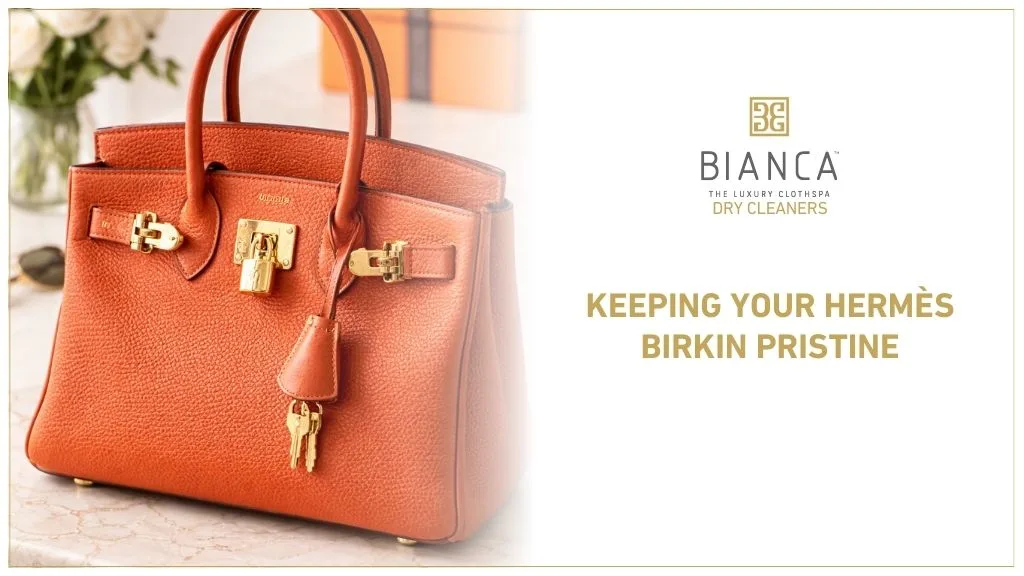
A Hermès Birkin is crafted to last a lifetime—but only when cared for with precision. In humid environments, moisture, heat, and daily handling can quietly compromise leather, hardware, and structure if the proper precautions aren’t taken.
As composer Johannes Brahms once said,
“Without craftsmanship, inspiration is a mere reed shaken in the wind.”
The same principle applies to preservation: true luxury endures only with thoughtful care.
Understanding Your Hermès Birkin Materials Before Care Begins
Before any cleaning or storage routine, it is essential to understand what your Birkin is made of. Different Hermès leathers respond very differently to humidity, friction, and products.
Common Hermès Birkin Leather Types and Their Sensitivities
Togo and Clemence leathers are more forgiving and grained, making them suitable for regular use, though they can soften over time in humid weather.
Swift leather has a smooth finish that shows scratches and colour transfer more easily.
Epsom leather is structured and resistant to moisture, but can crack if over-conditioned.
Box calf, while iconic, is extremely sensitive to water, heat, and marks, making it the most demanding to maintain.
Exotic leathers such as crocodile or ostrich require specialist care only. At-home cleaning is strongly discouraged, especially in tropical climates.
Hardware Finishes and Why They Need Protection
Birkin hardware—whether palladium or gold-plated—is prone to micro-scratches, oxidation, and dulling in humid air. Moisture and friction from daily handling can gradually reduce its shine. Protective plastic should be removed once the bag is in regular use, but careful handling and dry storage remain essential.
Everyday Habits That Protect Your Birkin Long-Term
Most damage occurs during everyday use, rather than during storage. Small habits make a significant difference.
What to Avoid During Daily Use
Avoid handling your Birkin immediately after using hand sanitiser, sunscreen, or lotion, as oils and alcohols darken leather over time. Pens, makeup, and sharp accessories should never be placed loose inside the bag.
In humid cities, resting the bag on floors or outdoor surfaces increases the risk of moisture absorption and staining.
Overloading the bag strains handles and softens structure—especially in softer leathers like Clemence.
Smart Accessories That Reduce Wear
Using a fitted bag organiser helps maintain shape and prevents interior stains. Twillies wrapped around handles reduce darkening caused by repeated contact with hands. Interior pouches for cosmetics and pens act as an additional layer of protection without altering the bag’s form.
How to Clean a Hermès Birkin Bag Safely
Cleaning should always be done with minimal effort and caution. Over-cleaning is one of the most common mistakes Birkin owners make.
What You Can Do at Home (And What You Shouldn’t)
Use a soft, dry cloth to gently remove surface dust. If absolutely necessary, you may use a lightly damp cloth on non-sensitive leathers, but never apply water directly. Always allow the bag to air-dry naturally, away from sunlight or heat.
Scrubbing, soaking, or applying pressure can permanently alter the leather grain.
Why DIY Products and Online Hacks Are Risky
Household cleaners, baby wipes, alcohol solutions, and internet “quick fixes” often strip natural oils from the leather. In humid climates, this damage worsens more rapidly, leading to cracking, uneven darkening, or loss of structural integrity. Once this happens, restoration becomes complex and sometimes irreversible.
Protecting Your Birkin From Humidity, Heat, and Colour Transfer
Humidity is the single biggest threat to luxury leather in tropical regions.
Managing Humidity and Moisture Exposure
Always store your Birkin in its dust bag, never in plastic. Silica gel or moisture absorbers placed nearby—not inside the bag—help regulate humidity. Avoid tightly closed cupboards without airflow, as trapped moisture can lead to mould and odour.
After use, allow the bag to rest in open air for a short period before storing it.
Preventing Colour Transfer on Light-Coloured Birkins
Light shades are particularly vulnerable to dye transfer from denim, dark clothing, and seating surfaces. Avoid placing the bag against dark fabrics for extended periods of time. Regular professional inspection helps identify early signs of transfer before it sets permanently.
Proper Storage: How to Store a Hermès Birkin When Not in Use
Storage is not about hiding the bag away—it is about supporting its shape and material.
The Right Way to Store Your Birkin
Stuff the bag lightly with acid-free tissue or soft cotton to maintain structure. Handles should stand naturally, not folded or pressed down. Store the bag inside its dust cover, away from direct sunlight and heat.
Boxes may be used for long-term storage, but only in dry, well-ventilated spaces.
How Often You Should Rotate and Rest Your Bag
Using the same Birkin daily accelerates wear. Rotating bags allows the leather to recover and maintain its form. In humid climates, resting a bag between uses significantly reduces moisture-related stress.
Seasonal Care Tips for Hermès Birkin Bags
Climate shifts demand slight changes in care.
Warm, Humid Weather Care
During monsoon or peak humidity months, reduce usage if possible. Inspect handles and base regularly for early signs of softening or mould. Professional conditioning may be recommended, but only when necessary.
Dry or Cooler Climate Care
In drier periods, leather may lose moisture. Conditioning should be minimal and done professionally to avoid over-saturation, which can lead to increased humidity later.
When to Seek Professional Hermès Bag Care
Professional care is not a last resort—it is preventive maintenance.
Signs Your Birkin Needs Professional Attention
Darkening handles, persistent odour, softened structure, deep scratches, or visible stains indicate it is time for expert intervention. Early treatment preserves both aesthetics and resale value.
Hermès After-Sales vs Specialist Bag Spa Services
Hermès after-sales services are ideal for structural repairs and hardware replacements. Specialist luxury bag care services, however, offer controlled cleaning, humidity-safe conditioning, and restoration suited for tropical climates—especially valuable between official servicing intervals.
Common Hermès Birkin Care Mistakes to Avoid
Many well-intentioned habits cause damage over time:
- Over-conditioning
- Frequent wiping with damp cloths
- Storing the bag immediately after use
- Ignoring early warning signs often shortens the bag’s lifespan.
Less intervention, done correctly, is always better.
Final Checklist: How to Keep Your Hermès Birkin Pristine for Years
- Use your Birkin thoughtfully.
- Clean only when necessary.
- Store with airflow and humidity control.
- Rotate regularly.
- Seek professional care early, not late.
Frequently Asked Questions
Home conditioning is not recommended. Applying the wrong product or using too much can darken the leather, alter its texture, and attract moisture—especially in humid climates. Conditioning should only be done professionally and only when necessary.
A Birkin does not need frequent cleaning. Most owners opt for professional care every 12–18 months, or sooner if there are visible stains, odours, or darkening of the handle. Preventive inspections are often more valuable than cleaning.
Yes, but with caution. Avoid prolonged outdoor exposure, protect the bag from rain, and allow it to air-dry naturally after use before storing. Using the bag continuously in high humidity without rest increases the risk of softening and colour transfer.
For regular use, the dust bag is preferable as it allows airflow. Boxes should only be used for long-term storage in dry, well-ventilated spaces. Never store the bag in plastic or airtight containers.
Light colour transfer can sometimes be reduced if addressed early by a professional. Once the dye sets deeply into the leather, complete removal may not be possible. Early intervention significantly improves results.