
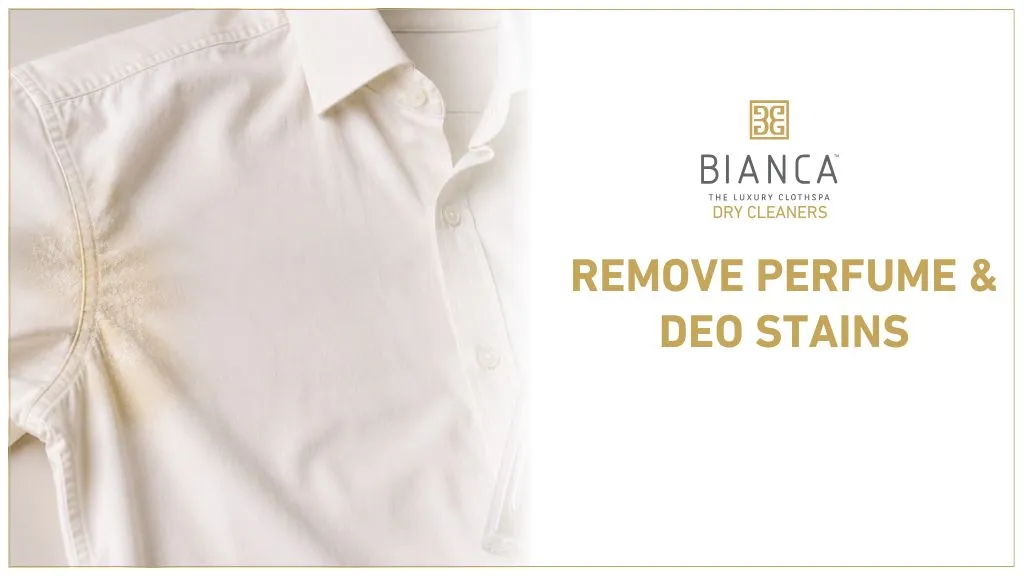
A misplaced spray of perfume or the gradual buildup of deodorant on a silk saree, designer blazer, or cashmere knit is an unsettling discovery. These marks often involve oil residues, dye interactions, and fibre bonding, rather than simple surface dirt. If handled using standard laundry methods, they can permanently alter a garment’s character.
For the modern professional in Mumbai, attire reflects presence. When a high-value piece is compromised, the goal should be garment preservation (the art of returning an item to its original state without sacrificing its structural integrity.
Why Your Wardrobe is Reacting
To manage these marks, one must understand what is happening at the fibre level.
Stain Source | Chemical Interaction | Why It Matters |
Premium Fragrances | Oil-based fixatives and resins. | These can oxidise over time, creating yellowed, hardened residues. |
Antiperspirants | Aluminium-salt complexes. | These react with perspiration proteins to create stubborn, insoluble bonds. |
Solid Deodorants | White, waxy fillers. | These sit on the surface of dark dyes and require careful, non-abrasive removal. |
The Myth of the Internet Hack
Articles frequently suggest vinegar, lemon juice, or baking soda as “quick fix” oxidisers from a textile conservation perspective; these are high-risk interventions.
- pH Imbalance: Acids like lemon or vinegar can shift the pH balance of natural dyes, leading to uneven fading.
- Mechanical Wear: Abrasives like baking soda can fray the microscopic scales of wool or silk, dulling the fabric’s natural lustre.
- Fibre Distortion: Aggressive rubbing (often encouraged in DIY guides) can physically distort the weave, creating visible wear that cannot be reversed.
The wrong first step can make professional restoration significantly more difficult. For a high-value wardrobe, the most prudent action is to consult an expert before attempting any intervention.
The Bianca Diagnostic Method
Professional garment care is about textile diagnostics. When a piece arrives at any of our Mumai facility, we move through a precise, conservation-led protocol:
- Fibre & Dye Assessment: We verify the specific textile composition, as silk, wool, and synthetic blends respond differently to various reagents.
- Controlled Patch Testing: Every treatment is tested on an inconspicuous seam to ensure the fabric’s aesthetic and structural properties remain unchanged.
- Conservation-Grade Reagents: We utilise professional-grade solutions that lift oil-based residues without requiring mechanical agitation, which can cause wear.
This meticulous approach ensures that the garment is preserved in its intended form. Professional textile guidance consistently emphasises fibre sensitivity and care in chemical application as the cornerstones of successful garment preservation.
When to Seek Professional Presutlisation
If your garment is silk, wool, velvet, hand-embroidered, or holds significant sentimental value, the risk of shrinkage, dye migration, or fibre felting is too high.
Instead of searching for a “fix,” lean into the expertise of specialists who emphasise the life cycle of your clothing. We invite you to consult with our team for a professional assessment. We can arrange for a discreet, insured collection at your convenience, ensuring your garments receive the care they were crafted for.
Request Your Professional Assessment
Your wardrobe deserves a long service life. Do not leave its preservation to chance. If you have a piece that requires our attention, reach out to us for a diagnostic review.
Contact Bianca for a Professional Assessment
Explore Our Specialised Restoration Services
For deeper insights into the longevity of your wardrobe, read our guides on The Art of Preserving Heirloom Silk Sarees and Preventing Underarm Yellowing: A Fabric-Friendly Guide.