
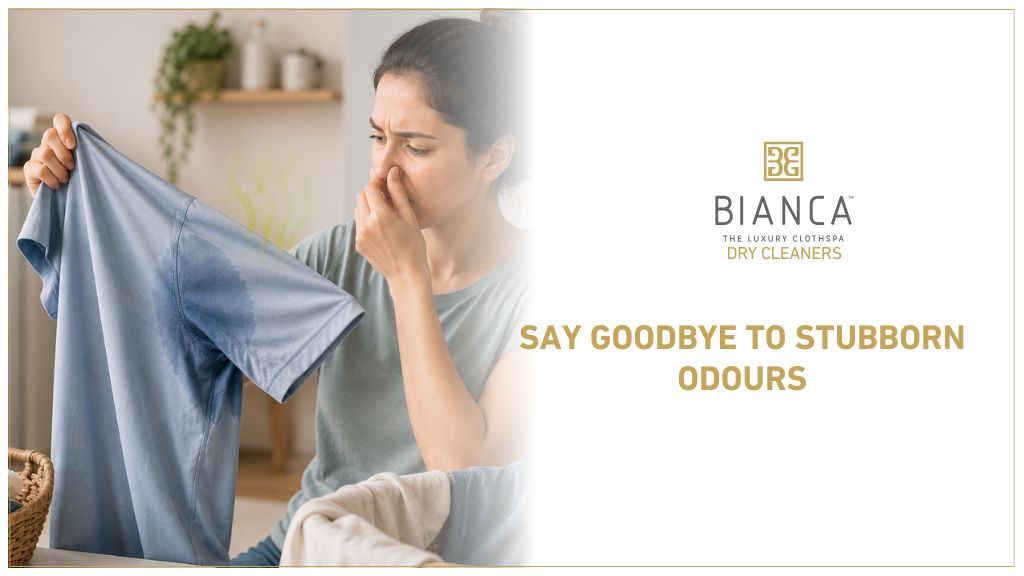
Tropical heat destroys expensive fabrics. You sweat heavily during your daily commute. The intense humidity in cities across Mumbai traps that moisture deep inside the fibres. Bacteria like Staphylococcus hominis thrive in this climate. These microscopic organisms are responsible for 90% of the persistent odours in your garments. You throw your clothes in the washing machine and think standard detergent cleans them. It does not. Cheap soap only masks the bacteria with artificial perfumes. It leaves the oily sebum behind. Soon, the fabric rots and yellows. To protect your investments, you must completely remove the bacteria. Here is exactly how to remove sweat smell from clothes and save your wardrobe.
Why Your Detergent Fails to Remove Odour
Standard shop-bought detergents cannot break down the oily sebum trapped in the fibres. Sweat itself does not smell. The bacteria breaking down your sweat create the bad odour. Cold water and normal soap cannot dissolve this bacterium. They just cover it up with synthetic scents. You need targeted action to permanently remove sweat smell from clothes. If you ignore the bacteria, they eat away at the fabric over time.
The Odour Extraction Fabric Matrix
Follow strict fabric-specific rules to extract odours without ruining your garments. Never use the same washing method for cotton and silk. Use this matrix to guide your daily humidity clothes care routine.
Fabric Type | Safe Home Action | What Ruins It | When to Call Bianca |
Everyday Cottons | Pre-treat underarms. Wash at 30°C. | Hard scrubbing with stiff brushes. | When yellowing appears. |
Gym Wear (Synthetics) | Wash inside out with sports detergent. | Fabric softeners trap the oils. | When you cannot remove odour from gym wear. |
Fine Wools/Blazers | Air out on wooden hangers. | Washing machines destroy the shape. | After 4-5 wears, or strong odours. |
Delicate Silks | Steam lightly from a distance. | DIY water and vinegar mixes. | Immediately upon noticing sweat. |
Bacteria thrive in 80% humidity. Once you extract the odour, you must change how you store your clothes to prevent the bacteria from returning.
The Precision Spot Treatment for Underarms
Extract trapped bacteria from robust fabrics using a strict three-step pre-treatment protocol. You must target the bacteria before the main wash. Do not scrub the fabric. Scrubbing tears the fibres and forces the dirt deeper. Follow these exact steps for robust cotton shirts:
- Turn the garment inside out: Access the trapped underarm sweat stains directly.
- Apply an enzyme-based stain remover: Dab the solution gently onto the affected area. Leave it for fifteen minutes.
Rinse with cold water to flush out bacteria. It is the only safe way to remove sweat smell from clothes at home without setting the stain
Prevention in Humid Climates
Stop bacteria before they breed in your wardrobe. You cannot control the tropical weather, but you can control your closet environment.
- Air-dry fully in ventilated rooms. Never put damp clothes in a dark closet. Hang them up first.
- Silica packs fight closet moisture. Place high-quality moisture absorbers inside your wardrobe to fight the ambient humidity.
- Weekly vinegar machine clean. Run an empty hot cycle with white vinegar once a week. The treatment kills the hidden mould inside your washing machine drum, which can transfer to your clothes.
The Danger of DIY Internet Hacks
Dumping raw vinegar or baking soda directly onto fine fabrics can destroy the dye and weaken the weave. The internet offers terrible advice for clothes care. People tell you to scrub silk with baking soda. But baking soda acts like sandpaper on delicate threads. Vinegar strips away natural fabric dyes. These hacks ruin your clothes when you’re looking for a quick fix.
Do not risk your wardrobe on homemade chemistry. Explore professional garment care services to handle premium fabrics safely.
Expert Disclaimer: Structured garments, delicate silks, and tailored pieces rely on intricate internal architectures. DIY cleaning methods can cause irreversible damage, such as bubbling, colour loss, or warped lapels. Always have high-value items evaluated by a textile professional.
Do not let trapped bacteria rot your best clothes. Book a professional extraction today.
Complete Odour Removal (FAQ)
Hot iron bakes trapped bacteria directly into the fibres. If you do not completely remove sweat smell from clothes during the wash, the iron's heat activates the hidden oils. It thus releases a foul odour and guarantees permanent underarm sweat stains.
Use a professional garment steamer to neutralise bacteria. High-pressure steam safely kills odour-causing agents. Never use heavily perfumed fabric sprays. Sprays layer chemicals over the sweat, leaving delicate silk blouses with sweat rings.
Yes, hot water permanently sets protein-based sweat into the fabric. Always use a cold water cycle. Cold water protects the fibres and prevents the proteins from permanently bonding to the material.
Wash synthetic activewear inside out with a specialised sports enzyme detergent. Standard shop-bought soaps cannot penetrate tightly woven synthetic fabrics. Never use conditioning agents on these fabrics; read exactly how fabric softeners work to trap sweat and ruin athletic wear.
Hand over structured garments to professionals immediately if odours persist after airing. Do not repeatedly wash tailored blazers. Rely on the experts at Bianca Cloth Spa to safely extract deep-set bacteria without destroying the garment's architecture.