
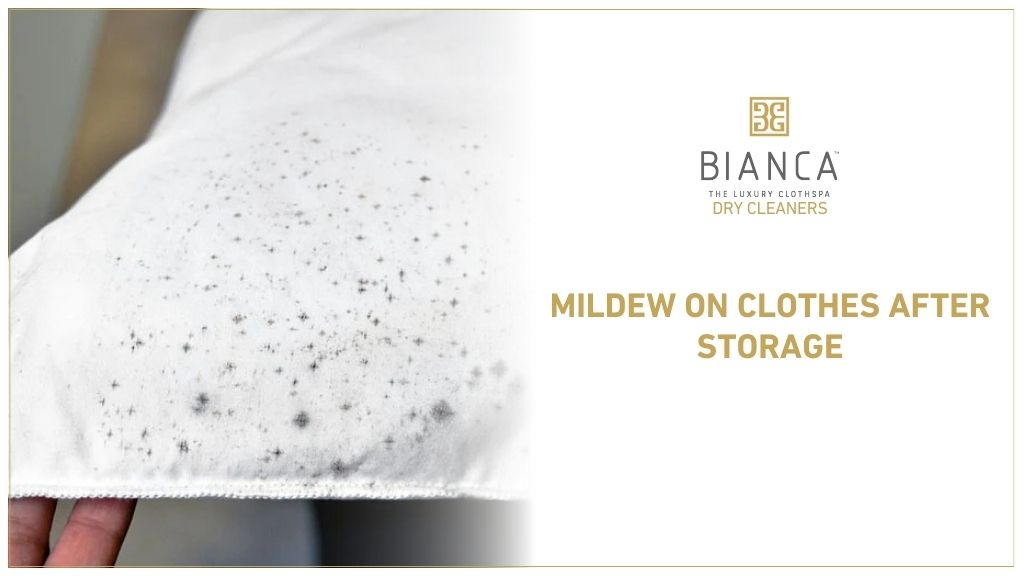
December is the month when wardrobes finally open up. Festive outfits, wedding wear, winter layers, and special-occasion clothing that’s been stored away for months suddenly come back into rotation. But for many people, this is also when an unpleasant surprise shows up—a musty smell or visible mildew on clothes.
At Bianca Cloth Spa, we often see garments in December that look perfectly fine at first glance but hide early signs of mildew damage. Understanding what mildew is, how it forms, and how to treat it safely can help protect your clothes—and prevent permanent fabric damage.
What Does Mildew on Clothes Mean?
Mildew is a surface-level fungal growth that develops on fabrics exposed to moisture, humidity, and limited airflow. Unlike heavy mold, mildew usually starts subtly—but if ignored, it can weaken fibres, leave stains, and cause lingering odour.
Mildew feeds on:
Moisture trapped in fabric
Natural oils, sweat, or detergent residue
Organic fibres like cotton, linen, silk, and wool
This makes stored clothes especially vulnerable.
Why Mildew Is Commonly Noticed in December
While mildew often forms during humid months, it’s December when people actually notice it. The reasons are simple:
Clothes have been stored for long periods
Wardrobes remain closed for weeks or months
Festive and wedding outfits are taken out after storage
Winter layers are worn after long gaps
By the time the garment is worn, mildew has already settled in.
Common Causes of Mildew on Clothes
1. Storing Clothes Before They’re Fully Dry
Even slight dampness can trigger fungal growth over time.
2. Poor Wardrobe Ventilation
Closed cupboards without airflow trap humidity—especially in coastal cities.
3. Long-Term Storage Without Cleaning
Worn clothes stored without cleaning carry sweat, oils, and invisible residue.
4. Detergent & Fabric Softener Build-Up
Residue can hold moisture inside fibres instead of letting them breathe.
5. Seasonal Packing Without Inspection
Delicate or expensive garments packed away without checking seams, folds, or hems are at higher risk.
Signs of Mildew on Clothes You Shouldn’t Ignore
Visual signs
White, grey, or greenish powdery patches
Small black dots (often mistaken for dirt)
Fuzzy growth along seams or folds
Smell
Strong musty or damp odour
Smell that returns even after washing
Fabric changes
Stiffness or weakened texture
Yellowing or dull patches over time
How to Remove Mildew from Clothes Safely
⚠️ Always check the care label before attempting any treatment. If the garment is delicate, embellished, or dry-clean-only, professional cleaning is the safest option.
Step 1: Isolate the Garment
Remove the affected item from your wardrobe immediately. This helps prevent mildew spores and odour from spreading to other clothes.
Step 2: Allow Air & Light Exposure (If Fabric Allows)
For sturdy, washable fabrics like cotton or linen, brief exposure to fresh air and indirect sunlight can help reduce surface odour. Avoid prolonged sun exposure for coloured or delicate fabrics.
Step 3: Wash Gently (For Mild Cases Only)
Use a fabric-appropriate water temperature
Choose a high-quality, mild detergent
Avoid overloading the washing machine to ensure thorough cleaning
This step is suitable only for garments that are safe to wash at home.
Step 4: Avoid Aggressive Home Treatments
Harsh chemicals, bleaching agents, or improvised remedies can weaken fibres, cause colour loss, and permanently damage delicate fabrics. These methods may mask odour temporarily but often worsen fabric condition over time.
Step 5: Dry Thoroughly Before Storage
Ensure the garment is completely dry before storing or wearing it again. Any residual moisture can cause mildew to return, even after washing.
When Professional Cleaning Is the Safer Choice
You should opt for professional care if:
The mildew smell persists after washing
Stains have darkened or spread
The garment is delicate or expensive
The care label advises dry cleaning
At Bianca Cloth Spa, every garment undergoes a detailed inspection before cleaning. If mildew or fabric stress is detected, the treatment is customised to ensure effective cleaning without compromising fabric strength, colour, or finish.
Final Thoughts
Mildew on clothes is common—but it should never be ignored. Early detection and correct treatment can save your garments, while improper handling can cause permanent damage.
This December, as you prepare for celebrations, travel, and weddings, take a moment to inspect your wardrobe. And when in doubt, professional garment care is always the safest solution.